
Mr. Sarfaraz Lakhani of Calibre Creators (CC) had the rare opportunity to interview Dr.Rajiv Shah, an accomplished Foot & Ankle Surgeon and the only one recognised in India for its treatment. He has travelled around the world attending conferences as a guest speaker and doing podium presentations. He is a Vice Chairman of Asia-Pacific Foot and Ankle Council and also a Past President of Indian Foot and Ankle Society. He has trained and mentored many young orthopaedic surgeons in the subject.
"It’s really very sad that in India, we have an epidemic of highly neglected foot and ankle diseases.Though Indian mythology has given the highest significance to touching feet of elderly, teachers and lords, sadly undergraduate medical curriculum in India has hardly touched Foot and Ankle as the area of the human body!"

Dr. Rajiv Shah is a practicing foot and ankle surgeon with over twenty years professional standing as an orthopaedist. He obtained his fellowships in the subject from Columbus, OH, USA and Chicago, IL, USA. He runs the first ever Foot and Ankle Centre of India at Vadodara and has a passion to develop this speciality in the Asian continent.
He is a faculty member in various national & international level conferences and workshops with innovative techniques under his belt. The ‘Foot School’ is a novel interactive educational model devised by him for spreading preventive care nationwide. He also runs a project "Save the Foot" for diabetics and a project "We Walk" for leprosy victims.
He is the First foot and ankle surgeon of India. He has been instrumental in establishing the first ever Foot and Ankle centre of India at Vadodara, Gujarat. He has also launched the first ever foot and ankle website from India (www.footankle.in)
He did his advanced foot and ankle fellowships under world renowned foot and ankle surgeons like Dr. Thomas Lee, Dr. Greg Berlet and Dr. Weil at Columbus, USA and Chicago, USA. His book on the subject titled ‘Handbook of Foot and Ankle Orthopaedics’ was awarded with ‘Best Orthopaedic Book’ award for year 2015. This book is translated in to Chinese, Arabic and Portuguese.
To know more about him and some pictures of surgeries conducted by him, please scroll down to the bottom of this article.
Sir, It is an absolute delight to be meeting a very very accomplished surgeon of India who has achieved global iconic status and bringing pride and glory to India and at the same time relieving people from their foot and ankle ailments.You are a beacon of light and hope for those suffering from this ailment and itis a matter of honour and privilege for Calibre Creators to be having you with us sharing your views on the Foot and Ankle Diseases.
CC.1 Sir, despite advances in medical treatment and introduction of technology and doctors being able to treat almost any disease in India, (a) why has not much attention been paid to this condition of Foot and Ankle disease? (b) Also, is this a medical condition related to some other health problem or is it a disease by itself?
Dr. RS: It’s really very sad that in India, we have an epidemic of highly neglected foot and ankle diseases. Though Indian mythology has given the highest significance to touching feet of elderly, teachers and lords, sadly undergraduate medical curriculum in India has hardly touched Foot and Ankle as the area of the human body! Today, if I ask a simple question pertaining to the anatomy and function of the human foot and ankle, the majority of medical students fail to answer. Feeling of neglecting foot and ankle orthopaedics amongst the medical population is poured since the birth of a doctor. On the side of patients, till the 19th century, our population hardly ever used footwear, because we never considered foot as an integral part of the human body. Similar is the thought process of society towards problems of foot and ankle. We never focused on our country’s performance at sports, hence we did never focus on augmenting the performance of sportsmen through diagnosing and fixing their foot and ankle problems. In fact, foot and ankle problems are a large subset of problems in itself with its most vital secondary effects over every part of the body.
CC.2 If the awareness for this problem is so low in urban areas, what then would be the situation in rural India? What are your plans to create awareness about this across the country?
Dr. RS: Indeed awareness about foot and ankle problems is very low in urban areas of India. Every city in the western world would have dedicated centres of excellence for foot and ankle care. In the western world, foot and ankle diseases are being treated under one roof by a team of qualified medics and paramedics. Every sports team has a foot and ankle specialist who periodically evaluates team members for the health of their feet. Every possible effort is made to maintain the foot and ankle of sportsman in perfect shape, thereby to prevent injuries and to optimize performance.
The situation in urban India is just the opposite. I fully agree about your worry. India lives in villages. India is a world’s diabetic capital with our maximum diabetic population living in villages. The situation is truly pathetic! Many villagers are still not using footwear and are walking bare feet; working in farms; making themselves prone to foot and ankle problems. A diabetic population with injuries in foot and ankle could be a waddle sign for salvage of feet! Many of such cases end up in amputation of toes and foot. The rate of amputation in diabetics in the western world is 2% to 4% while the matching rate in India is alarming at about 30%!
Prevention is always better than cure. Creating awareness is the only way we can fight this issue out. Since I started practicing foot and ankle orthopaedics, my only goal has remained ‘Education and Awareness’. I have been doing ‘Foot Schools’. Foot school is a novel interactive educational workshop that talks about the significance of foot and ankle, its common diseases and the prevention of these diseases. For good foot and ankle health of society, large-scaled educational modules plus preventive foot and ankle check-ups are required. I have already furnished a detailed concept paper to the health department of the government to set up various permanent health awareness programs. They are as under:
• Save the Foot for diabetics
• We walk for the population at large
• Let’s perform for sportsman
• Catch them young for children
The details of these programs have already been passed with due remarks by Honorable Governor Sir to the Health Ministry of Gujarat State.
CC.3. Sir, for the benefit of our readers, please explain the causes and consequences of the Foot and Ankle disease?
Dr. RS: Foot and ankle is such an important ornament of the body that can get affected by trauma leading to sprains, strains, and fractures. As the body’s 25% of total bones are located in the foot and ankle, every possible disease of bone can be seen to occur in the foot and ankle. A wide spectrum of foot and ankle ailments range from congenital deformities, acquired deformities, Arthritis of joints, degenerative issues of tendons and ligaments, nerve problems, stress injuries and tumors. The most important aspect of our understanding should be that problems in the foot and ankle could be the sole reason for problems in the spine, hip and knee! In fact many of the diseases of the spine, hip and knee throw their first sign and symptom in the foot and ankle. Today, the biggest health irony of developing countries like India is the steep rise in lifestyle diseases. Such diseases include diabetes, obesity, hypertension and stress syndrome. Control over these diseases is mostly by the way of maintaining the body’s fitness. How can we control our diabetes and hypertension if our feet are not healthy?
CC.4. Is it an age-related problem and what are the probable symptoms one should look out for and can early diagnosis help avoid surgery?
Dr. RS: Age-related foot and ankle problems include arthritis, deformities, and stress injuries. Development of pain, fatigue and deformation are the earliest symptoms. After the age of 50, every individual must develop a habit of ‘Check-look’ at his/her feet after taking a bath. This should be in a good light. Any new symptom of pain or fatigue should never be taken casually. Any deformation of feet should be consulted. For a diabetic, I always advise having a complete foot examination with a magnifying mirror after a bath. Sportspersons must periodically evaluate his footwear for wear and tear and deformation. This would help in preventing sports injuries that can affect a sportsperson’s career from being cut short.
A watchful eye on any new symptom in the foot, regular exercises, and using correct footwear are the keys to control foot and ankle problems. No question that these habits would only help in preventing surgeries.
CC.5. How does corrective surgery help in treating the problem or can it be treated medically?
Dr. RS: For foot and ankle problems surgery is not the only solution. In fact, it is the last resort. Most of the conditions can easily be treated with lifestyle modification, disciplined care of foot and ankle plus physiotherapy. Orthotics which are the external devices or modifications made in footwear; helps a lot to support and balance the foot thereby reducing sufferings in most of the diseases. Medical management in the form of drugs works well in many cases. Failing these conservative modalities only pushes a patient to option of surgery as the final answer. Surgery works in many ways like correcting the deformity, correcting the faulty axis, eliminating pain generating areas, removing offending focus, etc.
CC.6. I read that you used 3-D printed titanium prosthetic /bone for one of the surgery? Can such a treatment be made affordable for socially and economically challenged population and how? Is this surgery covered under the PMJAY Ayushman Bharat Scheme, a pet scheme of our Honourable Prime Minister Shri Narendra Modi?
Dr. RS: 3=D printing technology has made a revolution in the world of foot and ankle orthopaedics. By 3-D printing, one can make a body part similar to the original one! The technology is used in foot and ankle trauma where a part or whole of a missing bone can be prepared with similar size and dimensions with the help of 3 D printing. Even tailor-made jigs to put screws and plates for fixation of complex fractures can also be prepared. It is also used extensively in correcting foot and ankle deformities. A plastic bone model looking exactly like the original deformed foot can be made for a surgeon who plans and performs a virtual surgery on a bone model before the actual surgery. You can imagine what wonders this technology can do. Such a rehearsal of surgery would not only reduce the operating time of the surgeon but will also result in seamless execution and of surgery.
3-D printing technology is used extensively in the western world but the use in India is limited because of its high cost and a small number of service firms. I wish special subsidies be given by the government to such 3-D printing firms to make this technology cheap and affordable.
I replaced lost talus bone of a tribal with 3-D printed titanium talus bone which saved a patient’s limb from being amputated. This 3-D printed implant cost INR 1.5 lacs to the patient! Obviously, this is the highly prohibitive cost. The firm that prepared this implant took six weeks to supply this model! Companies in the western world supply such models in a week's time, that too with three sizes (Plus two, zero and minus two) at a similar cost!
To make this technology available to every walk of population, coverage under government schemes would be worthwhile. We need to work hard on this front very vigorously and I am striving hard to create an army of Foot and Ankle Doctors to handle this large scale pandemic situation. We are running against time!
CC.7. Sir, is this a simple or a very specialised surgery and what is the average length of this process?
Dr. RS: 3-D printed Talus replacement is a specialised surgery, more so whenever you are carrying it out for a case of trauma. After trauma, tissues are contracted and fibrosed. They do not ply as normal tissues. A surgeon should be able to accurately put new titanium bone into the place of the original bone. While implanting this artificial talus one has to be cautious of not injuring surrounding tissues as well as fracturing surrounding bones. The surgeon is supplied with only one size of such an artificial bone and he should be spot on to push this bone into the cavity where the original bone was lying. Failure to do so means the purpose of surgery is spoiled and all expenses and efforts are in vain. The surgery lasts for about two and a half hours. This is a replacement surgery and falls into major surgery.
CC.8. For those who have never been in an OT in a conscious state (for procedure/ surgery/ delivery), what is a typical scene like in the OT?Are there any anxious moments?
Dr. RS: Operation theatre is a temple, mosque or a church and patient is God. The surgeon with his team has a unique opportunity to serve the Lord. No stones are left unturned to make prayers successful. There are multiple tenacious moments starting from the point of anaesthesia to the precise execution of surgery; as complications, can occur at every step. One has to be always thinking and anticipating in operation theatre. I always like to draw my plan for surgery beforehand which is communicated to the Surgical Team. “Plan B” should always be in mind for any surgery to take care of any complications or adverse situations. There is always peace and focused attention on the patient during the operation. No chatting, talking or unnecessary movements are permitted in the operation room.
CC.9. For a little while, let’s get on the lighter side of life. You must have come across many patients and some of them or situations must have been funny or provoked humour. Can you recall any such incidents?
Dr. RS: Yes, indeed. There are few moments in the operation theatre which generates humour. Let me site such an incident. Orthopaedic surgeons use equipment called “C-arm” or “Image Intensifier Television (IITV)”. This equipment gives live imaging of a part being operated and helps in speedy passage of nails and screws. In day to day language instead of calling it as C-arm or IITV, we call it ‘TV’! Once during surgery, I asked my resident ‘show me TV’. To our surprise, the patient who was little awake heard this and immediately said ‘Rajiv Sir, agar aapko TV hi dekhna hai to mera surgery khatam kareke dekhona’! (Sir if you indeed want to watch Television, please do so after completing my surgery!) We all laughed a lot and we still remember this incidence.
CC.10. What was the turning point in your career when you decided that you want to focus on a specialty?
Dr. RS: I was a big-time spine specialist after starting off my orthopaedic private practice as a general orthopaedic surgeon. One fine day, one of my junior colleagues asked me, ‘Sir, who does good foot and ankle cases in India?’ I made a joke, ‘You!’ He immediately replied that there is a huge number of people suffering from it without any correct guidance and something needs to be done about it. The very same night I decided to carve my niche to become a foot and ankle specialist.
CC. 11 What career advice would you like to give to new medical graduates and those practicing as Orthopaedicians about specialising in the Foot & Ankle disease?
Dr. RS: Foot and ankle orthopaedics is a specialty where you have every sphere of orthopaedics under its umbrella. This covers trauma, deformity, replacement, arthroscopy, endoscopy, degenerative problems, tumors and paediatric orthopaedics. Why not shape a career in this young and emerging specialty? Least of competition, ease of learning and fun to practice! What one needs are focus and perseverance. If you really love the area of your specialisation, progress is deemed.
CC.12. You recently had Dr.Amanda Fantry, Orthopaedic Surgeon of Brown University, US come to India to train under you for a month. If Indian Doctors wants to do the same, how can they approach you?
Dr. RS: Training and mentoring US graduate was real fun. Western countries do not have exposure to kind of mangled and neglected cases we see day in and out. The western world always desires to learn about our methods based on our innovations with which we treat our cases in spite of limited resources and financial constraints. Mine is the first-ever centre in India, where a structured fellowship program for foot and ankle orthopaedics is being run from the last eight years. Young orthopaedic doctors apply well in time for the same. Every year, I train six such juniors in the subject. Looking to more than two years of waiting for such a fellowship program, I have now announced three days of capsule courses. Four such courses are planned per year. The doctor simply needs to write to me about this.
CC.13. You juggle with multiple functions and social responsibilities and also have a family. How do you maintain the balance between each of these?
Dr. RS: Work-life balance is truly demanding. With my mission of establishing foot and ankle orthopaedics as the specialty of orthopaedics, I have to travel a lot. I make sure to take my better half with me during most of my trips. I start my day early by 4 am so that I can finish my academic work before my family members wake up. I try to make sure that I never carry the burden of my work at home. Frank discussions with family members before taking newer commitments has also resolved many of my issues. Fortunately, my family members being from medico background they have been truly accommodative.
CC.14. Do you ever get restless or frustrated about not being able to accomplish enough and try to squeeze in maximum work activity in your working hours?
Dr. RS: Like every other human being I do get frustrated when I am unable to finish my jobs in time. Though I plan way ahead of schedule and I also draw my plan B as a habit, still, things fall out of schedule. I do not try to squeeze work activity in limited hours but I like to delegate works to my team. I also love to finish all my work during travel.
CC.15. Please list your top priorities to spread awareness about this health condition?
Dr. RS: My top priority is to educate doctors. Doctors are primary touchpoints, if they are aware of early diagnosis and scientific management of foot and ankle ailments than my job is done. Doctors can only spread awareness amongst the population about preventive aspects. Trained doctors will also help in scrapping prevailing myths in society about foot and ankle disorders.
CC.16. How you do relax?
Dr. RS: Music, yoga and meditation are my buddies for relaxation.
CC.17. Your Favourite Dish?
Dr. RS: Sprouts
CC.18. Your Favourite Song or Preference for Music?
Dr. RS: “Hum Ko Man Ki Shakti Dena” (Oh Lord, bless us with the strength of spirit so that we emerge victorious”. I prefer live stage performances focused on old and classic Hindi movie songs.
CC.19. A hobby you pursue in your spare time.
Dr. RS: Dramatics and travelling.
Sir, I thank you for your time off from your hectic schedule and informing our readers about your work and the most neglected Foot and Ankle Diseases. I pray that you succeed in your plans to help more and more people by treating them and training doctors across India and the world.
Note: The views expressed by Dr.Rajiv Shah are his personal and do not represent the view of the organisation he is associated with.
About Dr. Rajiv Shah:
He is :
1. Honorary Foot and Ankle Surgeon to Governor of Gujarat (2017-2019)
2. The Managing Director of Sunshine Global Hospitals, Vadodara, Bharuch-Surat
3. Member of the Executive Council, Global Foot & Ankle Community
4. Vice Chairman, Asia Pacific Foot & Ankle Council (Chapter of APOA)
5. Vice President, Asia-Pacific Society for Foot & Ankle Surgery (APSFAS), International Advisory Board Member & South-Asia coordinator, Foot Innovate, International webinars.
6. Past President, Indian Foot and Ankle Society (2014-15)
7. National Chairman, Indo-US foot and ankle courses (2009 onwards)
8. Co-Chairman, Parekh African Foot and Ankle courses (2014 onwards)
9. Member, editorial board, Journal of Asia-Pacific Foot and Ankle Society
10. Reviewer for Foot and Ankle section for four indexed medical journals.
11. Acclaimed radio, stage and television drama actor, radio announcer and a creative writer
He has successfully carried out more than 3500 Foot and Ankle surgeries on patients from India and from other countries like USA, UK, Gulf countries, African Countries and SAARC countries.

- Has authored chapters in ten international books in the subject of Foot & Ankle Orthopaedics
- Editor for Foot & ankle section for ‘Textbook of Orthopaedics & Traumatology’ published by Indian Orthopaedic Association
- Author of book titled ‘Handbook of Foot and Ankle Orthopaedics’ published by Thieme publications which was awarded the ‘Best Orthopaedic Book Award’ for year 2014-15. The same has been translated in Portuguese, Chinese & Arabic languages. The books is available on Amazon.in
- Delivered more than 350 podium presentations in International and National Foot and Ankle meetings
- Only Indian Foot and Ankle Surgeon, who as an invited guest speaker, has delivered many scientific presentations at international platforms in countries like USA, Canada, China, South Korea, Turkey and Mauritius.
- Has more than 20 publications and research paper presentations in reputed international journals to his credit.
- Has developed own classification ‘ADEINO classification’ for calcaneus malunion’ being recognized widely across the world.
- Trained and mentored many young and upcoming orthopaedic surgeons in the field of foot and ankle by fellowships, workshops and courses.
https://drrajiv.in
http://www.footankle.in/Dr.%20Rajiv%20Shah.pdf
http://www.ifas.in
===============
CASE STUDY 1
===============


 |
| Post-Surgery |
===============
CASE STUDY 2
===============

CASE STUDY 2
===============

 |
| Post-Surgery |
=
===============
CASE STUDY 3
===============

===============

 |
| Post-Surgery |
===============
CASE STUDY 4
===============


CASE STUDY 4
===============


 |
| Post-Surgery |
===============
CASE STUDY 5
===============


CASE STUDY 5
===============


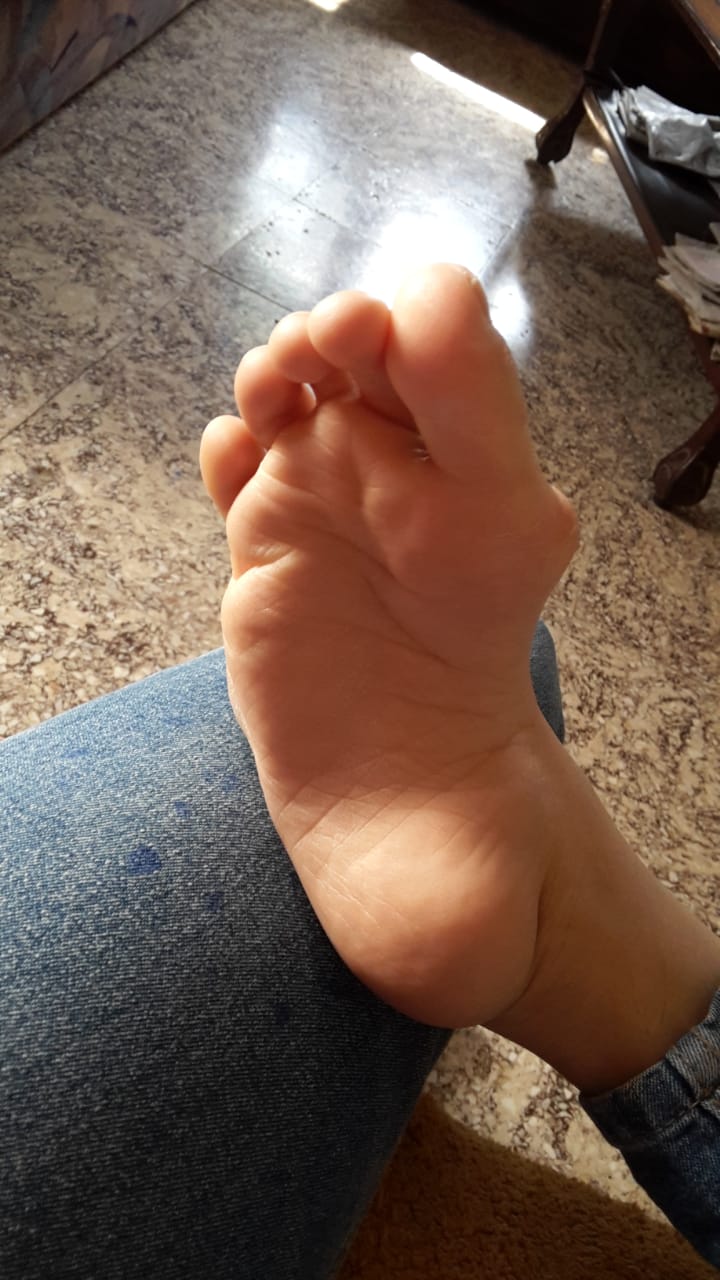


 |
| Post-Surgery |
===============
CASE STUDY 6
===============


===============
CASE STUDY 7
===============


CASE STUDY 6
===============


CASE STUDY 7
===============


 |
| Post Surgery |
===============
CASE STUDY 8
===============


===============


 |
| Post-Surgery |
===============
CASE STUDY 9
===============


CASE STUDY 9
===============


 |
| 3-D Printed Bone |
 |
| Talus Bone |
 |
| One of the many press clippings |
 |
| Electronic Media Coverage - Dr. Amanda Fantry's Visit to India |
\


